Sub-Zero Refrigerator Repair
Sub-Zero Fridge Smells From the Outside? Find the Source
An odor coming from the outside of a Sub-Zero fridge usually starts behind the grille or kickplate or on the door seal: a dusty condenser, a soiled drain pan, a mildewed gasket or a slow leak. Clean the condenser and gaskets first; a hot electrical smell means switching off and calling.
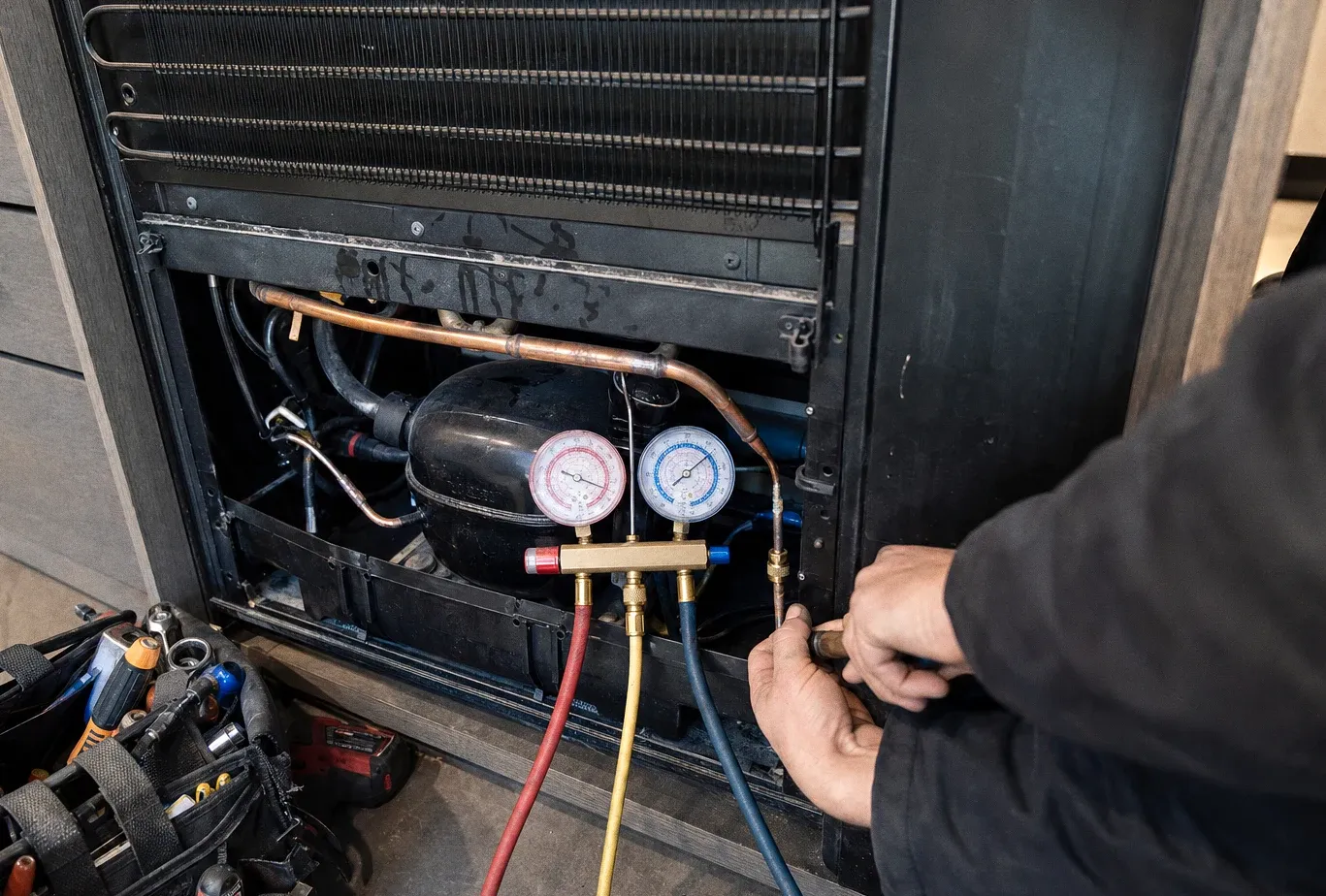
When a Sub-Zero smells from the outside rather than inside, the cause is almost always the machinery compartment or the door seal, not the food. A warm, dusty smell points to a clogged condenser. A sour or musty one usually means a dirty drain pan, mildew in the gasket folds, or a slow water leak under the unit. Cleaning the condenser and the gaskets takes about twenty minutes and settles most cases. If the smell is sharp and electrical, or the fresh-food side reads above 48 degrees while set at 38, switch the unit off at the control panel and call for service.
A built-in sits flush inside cabinetry, so whatever happens behind its grille or kickplate has nowhere to go except into the room. In a narrow galley or a garden-level kitchen, you tend to notice it within a day.
First, rule out the inside
Open both doors and smell each compartment. If the odor is stronger inside, you are dealing with food, a spill, or a spent air purification cartridge, which is a separate job. Sub-Zero’s cartridge, part 7042798, replaces the older 7007067 and scrubs the cabinet air every 20 minutes for about a year. It never touches air outside the cabinet, so a fresh one will not fix a smell at the grille or the floor.
If the inside is clean, close the doors and check three spots: the grille or kickplate, the seams along each door edge, and the floor at the toe space. Whichever is strongest tells you which section below applies.
A warm, dusty smell: the condenser
The condenser releases the heat pulled out of the food compartments. Once it is matted with dust, lint or pet hair, the compressor runs longer and hotter, and air blowing across that layer bakes it. You get a dry, faintly scorched smell, strongest at the grille and most noticeable while the unit is running.
Sub-Zero’s schedule is once or twice a year, with extra passes where a dog or cat sheds; a unit younger than six months can skip it. The USDA gives similar advice for refrigerators generally, since lint packed into the front grill starves the coil of air.
Getting to it
Classic (CL) owners lift the flip-up grille to expose the coil. Designer (DET, DEC) columns hide it behind a kickplate held by two screws. Power the unit down from its own control panel and wear gloves. A vacuum fitted with a soft brush does the work, moved in the same direction the fins run, never crosswise, because aluminum fins fold easily and folded fins block air. Chemical coil sprays are unnecessary, and Sub-Zero advises against them.
If the smell fades over the next day, you are finished. If the fridge was already running warm, the 48-degree rule above applies.
A sour or musty smell at floor level
A frost-free refrigerator melts the frost off its evaporator on a schedule and sends that water down a tube to a shallow pan in the machinery area, where condenser heat evaporates it. Normally the pan holds only clean meltwater. When a spill inside runs down the drain, or the tube carries food particles with it, the pan grows a film that smells like a damp dishcloth.
With the power off and the grille or kickplate removed, find the pan with a flashlight. If it lifts out freely, wash it in warm soapy water with a little baking soda, dry it, and set it back exactly as it sat. If it is tucked behind tubing or wiring, leave it for a technician.
Mustiness can also come from water you never see. Units with an ice maker or dispenser have a supply line behind them, and a slow drip at a fitting can soak the subfloor for weeks before anything shows. Look at the toe space for darkened wood or swollen trim. A leaking valve or line typically costs $290–$670 to put right, and catching it early spares the cabinetry.
Mildew on the door gasket
The gasket gets touched more than any other part of the fridge, and the folds of the magnetic seal trap crumbs and moisture. Black specks in those creases give off a musty smell along the door edge, especially when the door has been shut for hours.
Sub-Zero’s method is gentle. Turn the unit off and wipe the gasket with mild detergent and water on a soft cloth. Baking soda paste lifts stubborn stains, and where you see mildew, Sub-Zero allows a weak bleach solution at a 1:10 ratio. Keep vinegar and rubbing alcohol away from it. Open each fold so you reach the bottom of the crease, then dry it well.
If the seal is ripped, torn or cracked, cleaning will not cure the smell, because moisture keeps collecting in the damage. Sub-Zero advises replacement and recommends a technician fit it; these gaskets come only through the manufacturer’s parts distributors, not online. Gasket replacement typically runs $280–$800.
Hot, sharp or electrical smells
A smell like overheated plastic or hot wiring is not dust. Likely causes include a condenser fan motor that is seizing, a connection overheating, or a compressor straining because the fan has stopped moving air. Turn the unit off at the control panel, and if the smell lingers, switch off its breaker as well. Do not keep it running to see whether it settles.
A failed fan motor is usually a $300–$590 repair. A compressor or sealed-system fault is a larger job, typically $1,010–$2,090, and that is the point where weighing repair against replacement makes sense.
Before you book a visit
Write down the model and serial numbers first. Our note on where the model number is on a Sub-Zero shows the usual places to look. Add which spot smelled strongest and whether the unit has been running warm; those two details shorten the diagnosis.
Sub-Zero Repair Boston is an independent service. A visit with a complete diagnosis is a flat $95, and that fee is deducted from the repair once you give the go-ahead. Every figure above is a typical range, and the firm price comes after the diagnosis. Call (781) 675-1098, or read about our Sub-Zero refrigerator repair in Beacon Hill, the South End, the North End and Medford.
Still asked on the phone
Why does my Sub-Zero smell from the outside but not inside?
The source is usually the machinery compartment or the door seal rather than the food. A dusty condenser gives off a warm, dry smell at the grille, while a dirty drain pan, a mildewed gasket or a slow water leak produces a sour or musty one near the doors or the floor.
Will a new air purification cartridge stop an outside odor?
No, the cartridge only cleans the air inside the cabinet. Sub-Zero part 7042798, which replaces 7007067, is worth changing about once a year, but a smell at the grille, the door edge or the toe space has to be traced to where it starts.
Can I clean a moldy Sub-Zero gasket with vinegar?
No. Sub-Zero says to keep vinegar and rubbing alcohol off the gasket. With the unit switched off, use mild detergent and water, a baking soda paste for stains, or one part bleach to ten parts water for mold, then dry every fold thoroughly.
When is an outside smell a reason to call right away?
Call when the smell is hot, sharp or electrical, or when the fridge is also running warm. Turn the unit off first. Sub-Zero notes that a refrigerator reading above 48 degrees at a 38-degree setting is unlikely to recover from a condenser cleaning alone.